
PROJECT TITLE
YEAR
PROCESS BOOK
What They Did For Love
2026
What They Did For Love
2025
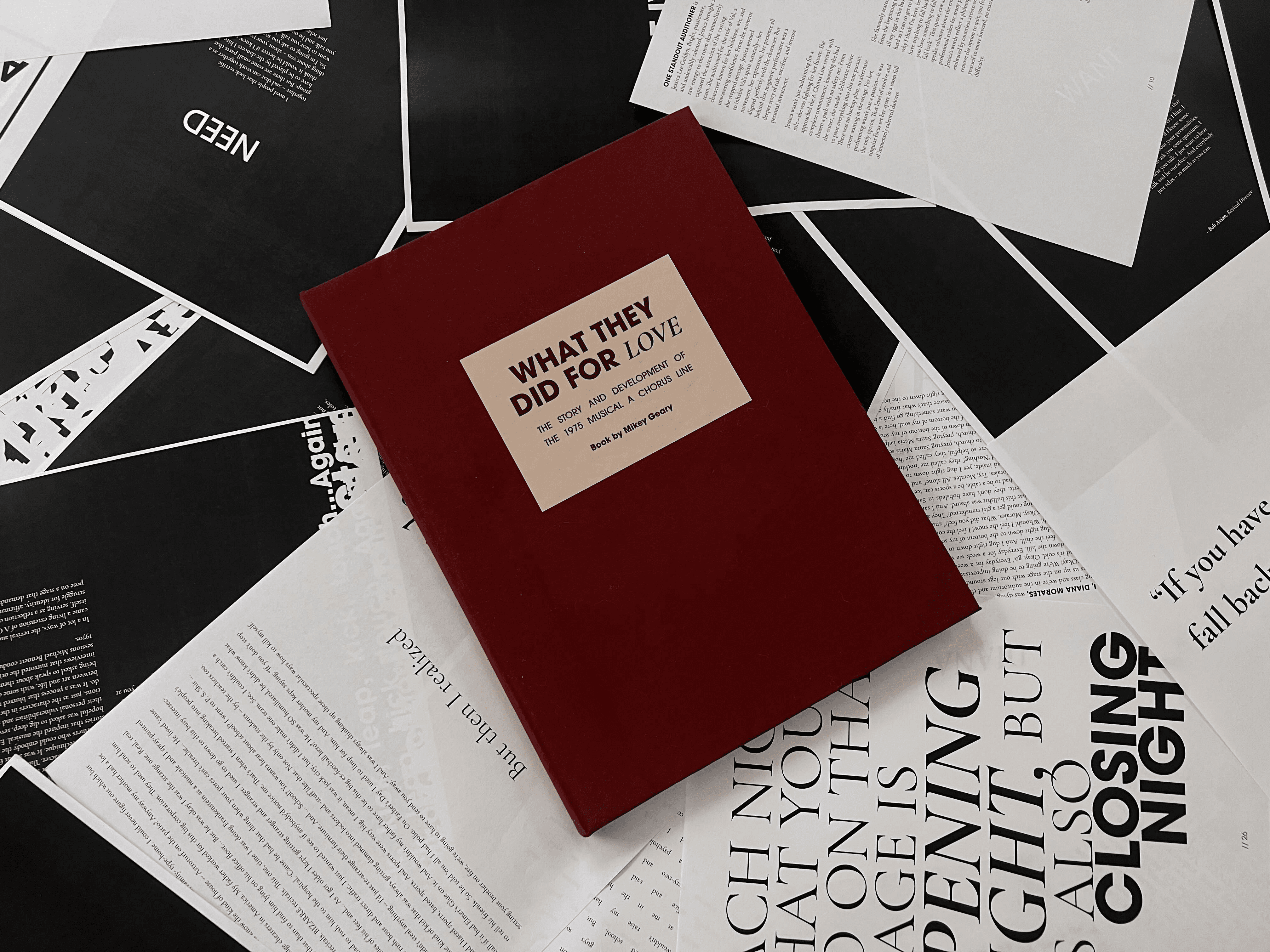
What They Did For Love is a typographic book inspired by the creative process that was the development of the Broadway Musical, A Chorus Line. The book typographically visualizes each of the auditioners involved in the storyline and highlights their unique backstories.
A CHORUS LINE SYNOPSIS

A Chorus Line is a groundbreaking musical, built by Michael Bennett, that offers an intimate look into the lives of seventeen dancers auditioning for a spot in a Broadway chorus. As they perform and answer personal questions from the director, each dancer reveals their dreams, struggles, insecurities, and the sacrifices they have made in pursuit of a career on stage.

Through its emotionally honest storytelling and iconic score, the musical focuses on this idea that although we all bring our own unique talents and characteristics to the table, at the end of the day, these seventeen dancers are desperate for the role of a clone, that being the member of a incredibly uniform ensemble.
By utilizing a variety of typographic layouts and compositions, the book progressively captures the emotional journey of the audition process as dancers compete for a coveted spot in the chorus. Each spread reflects a different stage of the experience, illustrating the vulnerability, determination, and uncertainty that accompany every audition. Moments of quiet reflection and isolation are contrasted with bursts of intensity, chaos, and desperation, allowing the pacing of the book to mirror the emotional highs and lows of the performers. Through expressive typography and intentional layout, the book transforms the dancers' experiences into a visual narrative that communicates the pressure, passion, and perseverance behind every performance.

ACT ONE

Act One opens the book at the pivotal moment before the director narrows the audition down to seventeen dancers. The opening spreads capture the overwhelming energy of a crowded audition room, where overlapping conversations, constant movement, and uncertainty create an atmosphere of controlled chaos. Every dancer is searching for structure and stability, yet the unpredictability of the audition makes that impossible. Through dense typographic compositions and layered layouts, the beginning of the book immerses the reader in the tension, anticipation, and disorder that define the first stage of the audition process.

ACT TWO

After the initial cut, Act Two shifts its focus to the seventeen remaining dancers, giving each performer a dedicated moment to step into the spotlight. Just as the musical reveals each character through personal stories, this book assigns every dancer a personalized spread that reflects their background, upbringing, struggles, aspirations, and motivations. This section contains the greatest sense of stillness, allowing readers to pause and connect with each individual beyond the audition itself. While many spreads embrace quiet reflection, others communicate their stories through dynamic typography and movement, echoing the expressive power of dance and reinforcing each character's unique voice.

ACT THREE

Act Three serves as a turning point, reminding both the dancers and the audience that a career on Broadway is never guaranteed. The uncertainty of the profession comes sharply into focus, as the performers are forced to confront the reality that talent and dedication alone cannot ensure success. This realization builds an underlying tension that propels the narrative into Act Four, setting the stage for the emotional chaos, heightened stakes, and final moments of desperation that follow.

ACT FOUR

Act Four captures the final hour before the ensemble is selected, as the remaining dancers give everything they have left. Every audition combination, statement, and movement is performed with unwavering stamina, strength, and determination, knowing that each moment could determine their future. As exhaustion and pressure mount, the choreography becomes increasingly frantic, mirroring the emotional weight of the audition. The act concludes with the dancers united in a conversation about the possibility of never dancing again—a sobering reminder of what is at stake. Throughout this section, the typography and layouts reflect an inability to find focus, with overlapping elements and constant visual conflict conveying the frustration, desperation, and overwhelming need to earn a place in the chorus.

ACT FIVE

Act Five marks the conclusion of the audition as the final ensemble is selected. The individuality, emotion, and chaos that defined each dancer throughout the book gradually dissolve as they transform into a single, unified chorus. While earning a place in the ensemble represents the fulfillment of their dreams, it also requires surrendering a degree of personal identity in favor of becoming part of a collective performance. This transformation is echoed in the book's visual progression, as the expressive, maximalist layouts steadily simplify into increasingly restrained compositions. The journey culminates on the final spread with a single word, symbolizing the dancers' evolution from distinct individuals into one synchronized ensemble.